
Just A Click Away.
Australia's July 2026 Visa Fee Increases: What You Need to Know
On 1 July 2026, the Australian Government increased application fees across a wide range of visa subclasses, effective immediately and without prior public announcement. The changes were reported across multiple sources including ABC News, SBS, and Absolute Immigration, with affected applicants discovering the increases only after they came into effect.
Former Deputy Secretary of the Department of Immigration, Dr Abul Rizvi, confirmed to the ABC that fee changes are typically embedded in the federal budget process, explaining the absence of any advance notice: the government does not want a surge of applications before the new fees take effect.
Key Fee Changes from 1 July 2026
The increases span temporary, permanent, and bridging visa categories. The table below summarises the most significant changes.
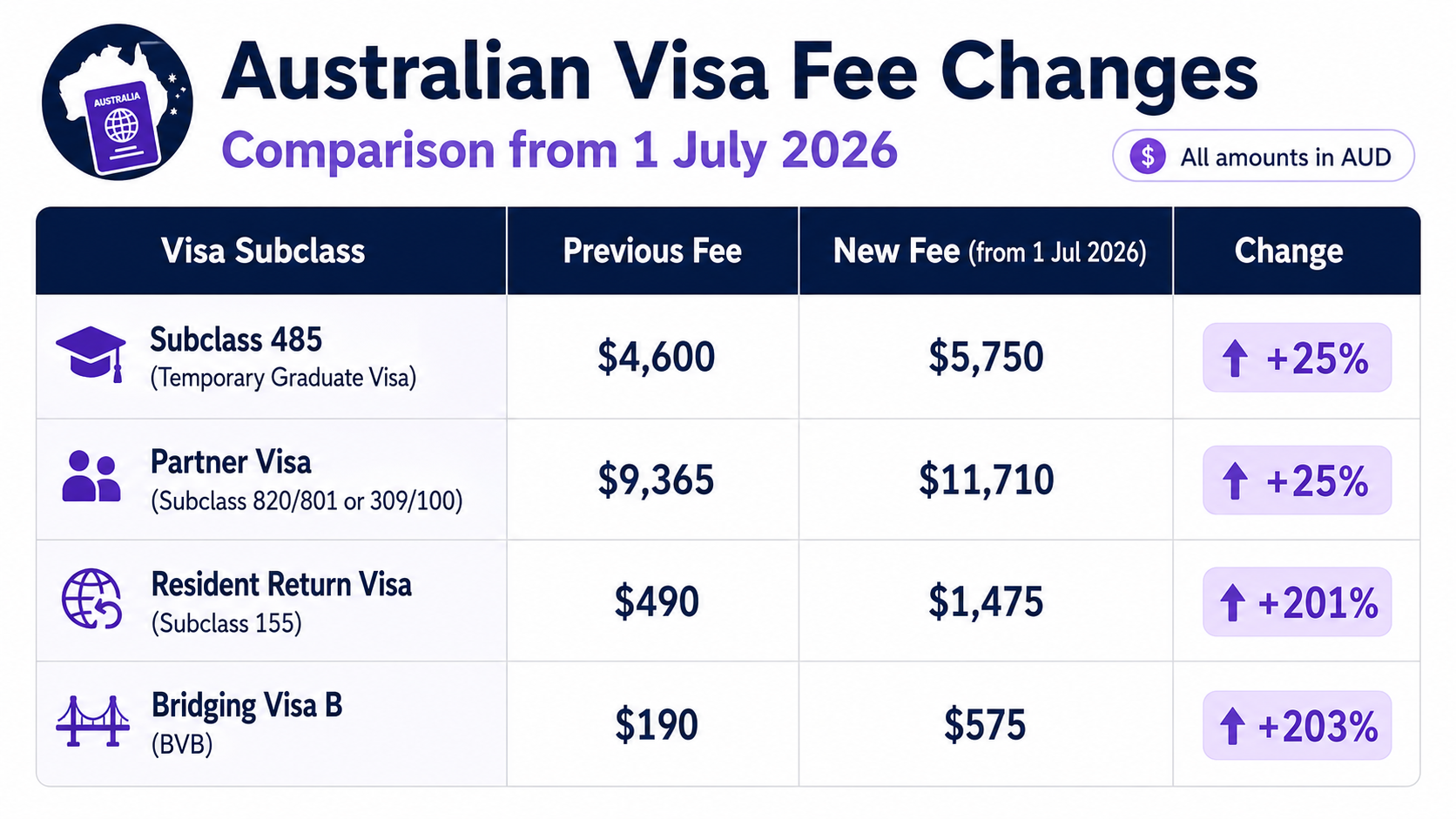
Note: The Subclass 485 fee had already been doubled in March 2026 from $2,300 to $4,600. The 1 July increase adds a further $1,150 on top of that already-elevated base.
Who Is Affected
International students and graduates are among the most directly affected. Those completing diplomas or degrees and planning to apply for the Subclass 485 Temporary Graduate Visa now face a total fee of $5,750, up from $2,300 less than 12 months ago, representing a cumulative increase of approximately 150%.
Partner visa applicants face a significant cost increase. The combined partner visa fee now sits at $11,710. Applicants who had a prior application invalidated and are required to reapply must now pay the new, higher fee, even if their original application was lodged at the previous rate.
Bridging Visa B holders who need to travel temporarily outside Australia while their substantive visa application is pending will now pay $575 to obtain travel permission, up from $190.
Permanent residents returning to Australia and needing to renew their Resident Return Visa (Subclass 155) face a fee more than three times the previous amount.
No Advance Notice: Why It Happened This Way
Under Australian migration law, visa application charges are prescribed by legislative instrument and can be updated as part of the federal budget process. Because these changes do not require a separate legislative amendment debated in parliament, they can take effect from a nominated date without a pre-announcement period. Dr Rizvi confirmed this is deliberate: advance notice creates an incentive for applicants to rush submissions at the old fee, which the government seeks to avoid.
The International Students Representative Council (ISRC) has criticised the approach, noting that student representatives were not consulted and that repeated sudden fee changes undermine Australia's reputation as a welcoming international education destination.
Practical Steps for Applicants
- Check the current fee before lodging any application. The Department of Home Affairs publishes visa application charges on its website. Confirm the fee on the day you intend to lodge, as changes can take effect without advance notice.
- Do not delay a pending application. If your application is ready to lodge, further fee increases remain possible in future budget cycles.
- If your application was returned or invalidated, seek legal advice before re-lodging. The circumstances of the invalidation may affect your options and obligations.
- For Bridging Visa B applicants, factor the new $575 charge into your travel planning. Apply for the BVB before departing Australia.
- Budget for the full visa pathway cost, not just the next application. Partner visa applicants in particular should be aware that secondary applicants and children attract additional fees.
Key Takeaways
- Visa application fees across dozens of subclasses increased on 1 July 2026 with no prior warning.
- The Subclass 485 fee is now $5,750, the partner visa $11,710, Bridging Visa B $575, and the Resident Return Visa $1,475.
- Some categories, including the Resident Return Visa and Bridging Visa B, increased by more than 200%.
- Fee changes are embedded in the federal budget process and can take effect without a parliamentary amendment or public pre-announcement.
- Applicants should verify current fees with the Department of Home Affairs or a registered migration lawyer before lodging any application.
The content of this article is intended for general informational purposes only and does not constitute legal advice. Immigration law is complex and subject to change. The information provided may not reflect the most current legal developments. For advice specific to your circumstances, please consult a registered Australian migration lawyer. For full terms governing use of this website and its content, please refer to our Website Terms and Conditions.
Speak with a Riverwood Migration Lawyer
As a regulated Australian migration law practice, Riverwood Migration provides precise, personalised advice on visa strategy, compliance, and application preparation. Speak with our expert legal team. Book a consultation to discuss your circumstances.
Stay Informed on Australian Immigration Law
- YouTube: Johnny Kong | Migration Lawyer
- Instagram: @johnny_migrationlawyer
- Facebook: Riverwood Migration
- TikTok: @johnny_migrationlawyer
- Linktree: linktr.ee/johnny_lawyer