
Just A Click Away.
The University of Sydney has not yet formally listed the new 6-point TOEFL format under its accepted English tests, while UNSW has signalled early movement for the 2027 intake. Applicants should take note of both language recognition and application timing changes.
Two developments in the Australian higher education sector have recently drawn attention.
One relates to English language recognition.
The other concerns application timing.
Both may affect applicants targeting 2026–2027 entry.
English Language Recognition – University of Sydney
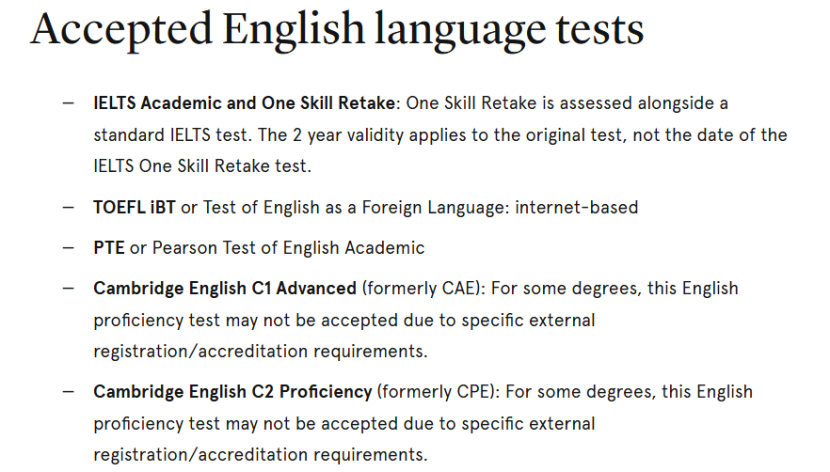
At present, the University of Sydney’s official English Language Requirements page specifies TOEFL iBT (0–120 scale).
The newer 6-point TOEFL format has not yet been explicitly included on the published list.
This does not necessarily indicate permanent exclusion.
However, until formally updated, applications relying solely on the 6-point format may face administrative uncertainty.
Practical considerations include:
- Potential system non-recognition
- Requests for supplementary documentation
- Delays affecting intake timelines
Applicants targeting Sydney may consider alternative recognised tests such as IELTS, PTE Academic, or the 120-scale TOEFL iBT.
UNSW – Early Movement for 2027 Intake
UNSW has signalled application activity for the 2027 intake, with selected high-demand disciplines (Engineering, Computer Science, Commerce) already visible within the system.
UNSW operates on a rolling admissions model:
- Applications assessed progressively
- Quotas applied by program
- Closure once capacity is reached
Historically, Term 1 (February intake) is the primary entry period.
While official deadlines may extend to November, competitive programs often reach capacity earlier.
Legal Perspective
These developments reflect structural alignment rather than sudden restriction.
From a regulatory standpoint, applicants should ensure:
- English qualifications meet both university and visa standards
- Application timing aligns with quota realities
- Genuine Student (GS) requirements are addressed strategically
Early preparation remains the most reliable safeguard against administrative or compliance risk.
Disclaimer
English language recognition is subject to official university publication at the time of application.https://www.unsw.edu.au/study/how-to-apply
Intake timelines are indicative only and may vary annually.
This article does not constitute legal advice.
📅 Book a Consultation: https://www.riverwoodmigration.com/consultation-info
💼 Speak with a Migration Lawyer: enquiry@riverwoodmigration.com
💬 Chat with Johnny: https://linktr.ee/johnny_lawyer