
Just A Click Away.
A Viral TikTok That Revealed a Bigger Risk
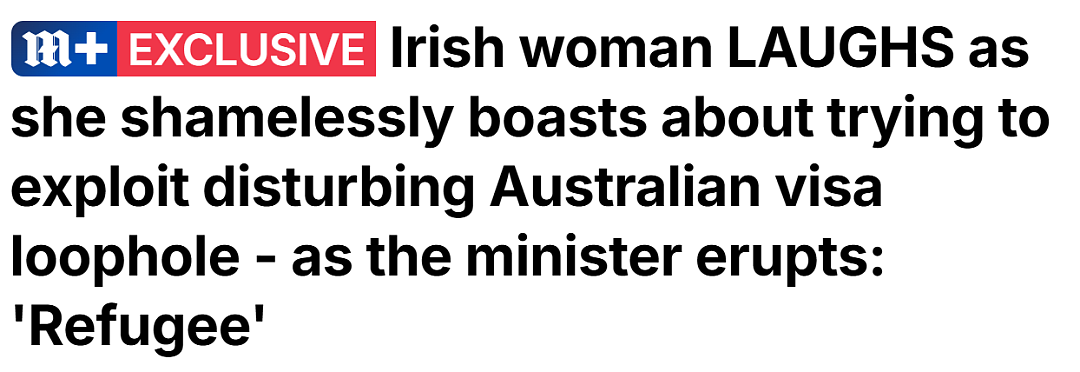
Recently, an Irish woman went viral on TikTok after claiming she managed to stay in Australia for several extra years by lodging a Protection Visa application.
But shortly after the video gained traction, she was reportedly removed from Australia.
The contrast between the online story and the real outcome has raised serious questions — and serves as a warning for many people who dream of staying in Australia.
Using a Protection Visa simply to “buy time” is not an isolated case. In fact, it has become a significant grey-area group that the Department of Home Affairs is increasingly monitoring.
Nearly 100,000 People in Limbo
According to publicly available data, by mid-2025, nearly 100,000 people who previously lodged onshore Protection Visa applications but were refused are still in Australia.
In addition, tens of thousands of Protection Visa applications remain under assessment.
Among these individuals:
- Some remain on Bridging Visas while waiting for decisions
- Some are pursuing administrative or judicial appeals
- Others have spent years living in a state of immigration uncertainty
The Department of Home Affairs has repeatedly warned that some temporary visa holders lodge Protection Visa applications primarily to delay departure when their visas are about to expire.
Such applications generally have extremely low success rates and can create serious long-term consequences.
Which Groups Are Under Scrutiny?
During the 2024–25 financial year, Australia received over 20,000 new onshore Protection Visa applications, but only a small proportion were granted.
Some patterns are becoming clear:
- Applicants from India and China represent large portions of applications, yet approval rates remain extremely low — often in the single digits, and in some cases close to 1%.
- Authorities and media reports have also highlighted Working Holiday visa holders from the UK and Ireland lodging Protection Visa claims when their visas are nearing expiry — even though refugee organisations report very few genuine humanitarian cases from these groups.
In other words, many applicants submit claims without meeting the legal refugee criteria from the outset, effectively placing themselves in an increasingly difficult immigration position.
The Real Cost: Far Beyond a Visa Refusal
Why do people still take this risk despite such low approval rates?
One reason is that removal processes can be slow and costly.
Some estimates suggest that clearing Australia’s unlawful non-citizen population could cost the government hundreds of millions of dollars, with individual cases sometimes exceeding tens of thousands of dollars once detention, appeals, and international coordination are considered.
Public statistics also show that while thousands of Protection Visas may be granted each year, the number of unsuccessful applicants who are actually removed from Australia is relatively small — sometimes only a few dozen per month.
This means many people remain stuck in the system for years, living in a state where they cannot easily leave, yet cannot legally stay.
However, the personal consequences for applicants can be severe:
- A Protection Visa refusal or visa cancellation record stays in the immigration system and will be considered in all future visa applications, significantly reducing approval chances.
- If a person fails to depart after a visa refusal or cancellation, they may face re-entry bans, making future travel to Australia extremely difficult.
- Providing false or misleading information in an application can lead not only to refusal but also to heavy fines and potential criminal liability, with penalties under the Migration Act reaching up to 10 years imprisonment in serious cases.
- In situations involving detention and removal, authorities may seek to recover removal costs from the individual.
In short:
Trying to “game the system” to buy time often means gambling with all future visa opportunities.
A Visa Refusal Is Not the End
Importantly, a visa refusal does not always mean the end of the road.
If handled properly, many applicants can still succeed through legitimate re-application strategies.
Take one example.
A student — let’s call him Xiao Yu — had his first Student Visa refused because his financial evidence and study plan were considered insufficient, raising doubts about his genuine student intentions.
When preparing his second application, he provided clear financial documentation and a structured study and career plan.
The result: his visa was granted, and he successfully began his studies in Australia.
The difference between the two situations is clear:
One path involves lodging a Protection Visa despite knowing the legal criteria are not met.
The other involves strengthening evidence and pursuing a genuine visa pathway within the rules.
The first carries high risk and low reward.
The second may require time and professional guidance — but it offers far greater long-term security.
Strategic Planning Is the Real Comeback
Within Australia’s migration system, refusals and challenges are not uncommon.
What truly creates risk is continuing down the wrong path for too long.
If you are currently:
- Considering whether to lodge a Protection Visa or another high-risk pathway
- Facing a visa refusal and unsure about the next steps
- Worried that previous immigration history may affect future applications
The safest approach is to seek professional legal advice early.
A qualified migration lawyer can help review your immigration history, identify risks, and design a legally viable strategy, rather than leaving you stuck in the system for years.
In Australia’s immigration system, the real “comeback story” is not about shortcuts.
It is about lawful planning, evidence-based applications, and a clear long-term strategy.
📅 Book a Consultation: https://www.riverwoodmigration.com/consultation-info
💼 Speak with a Migration Lawyer: enquiry@riverwoodmigration.com
💬 Chat with Johnny: https://linktr.ee/johnny_lawyer